
Provisional Programme of Work of the Peace and Security Council for February 2026
Provisional Programme of Work of the Peace and Security Council for February 2026
Date | February 2026
The Arab Republic of Egypt will assume the chairship of the African Union (AU) Peace and Security Council (PSC) for the month of February. The Provisional Programme of Work (PPoW) for the month includes four substantive sessions covering five agenda items. Among the five agenda items, two will cover country-specific situations, two will cover thematic issues, and another session will consider and adopt the ‘Report of the Activities of the PSC and the State of Peace and Security in Africa.’ The country-specific sessions will be convened at the ministerial level, while the thematic sessions will be held at the ambassadorial level. In addition, the PPoW includes two informal consultations – one with Sudan and another with Member States in Political Transition. The 48th Ordinary Session of the AU Executive Council and the 39th Ordinary Session of the Assembly will also be held during this month. A field visit is also planned for the last week of the month. Two meetings will be conducted physically, while two others will take place virtually, with virtual meetings having become part of the norm through practice.
On 3 February, the PSC will convene its first substantive session of the month to consider and adopt the ‘Report on the Activities of the Peace and Security Council and the State of Peace and Security in Africa.’ The session was initially scheduled for January 2026 but was subsequently postponed. Pursuant to Article 7 (q) of the PSC Protocol and in keeping with established institutional practice, the Council will, following its deliberations, transmit the report to the 39th Ordinary Session of the AU Assembly, which is scheduled for 14 to 15 February 2026. The report is anticipated to present a consolidated account of the PSC’s undertakings during the reporting period, alongside an analytical appraisal of prevailing trends and developments shaping the continent’s peace and security environment.
On 10 February, the PSC will receive two briefings on the situations in Sudan and Somalia at the ministerial level. The session will begin with a briefing on Sudan, preceded by an informal consultation at the ministerial level, which is expected to feature Sudan’s minister. The briefing follows the PSC’s 1319th session held in December 2025, during which the Council agreed to convene a Ministerial meeting on Sudan on the margins of the 39th Ordinary Session of the AU Assembly. During that session, the Council welcomed the establishment of the Quintet—the latest configuration in Sudan’s peace efforts—bringing together five multilateral organisations (the AU, IGAD, the UN, the Arab League, and the EU) with the aim of anchoring the political and civilian peace process under AU leadership. Cognisant of the emergence of a de facto two-pronged peacemaking architecture for Sudan (one focusing on ceasefire or humanitarian truce and the other involving the political/civilian track), the Council also called on members of the Quintet and the Quad to work closely together to ensure greater synergy in mediation efforts. In this context, one of the updates expected in the upcoming briefing concerns the consultative meeting of the Quintet held in Egypt in mid-January and the outcomes of that engagement. The briefing is also expected to provide a platform for the PSC to follow up on its previous decisions, including the establishment of an Inter-Departmental Task Force to coordinate humanitarian efforts, receive the latest updates on the security situation since the December meeting, explore ways to enhance coordination among the various mediation initiatives, and recalibrate the AU’s engagement in support of an inclusive, Sudanese-led political dialogue. It would not also be surprising if the issue of the lifting of Sudan’s suspension would arise, more so on account of the fact that it would be one of the issues that the representative of Sudan may likely raise during the informal consultation.
On the same date, the PSC will also receive a briefing on the situation in Somalia, expectedly with a particular focus on the operation and financing of the African Union Support and Stabilisation Mission in Somalia (AUSSOM). At its last meeting, held on 15 December 2025, the PSC considered the report of the Chairperson of the AU Commission, which highlighted key developments in Somalia and progress in the implementation of AUSSOM’s mandate during the period from July to December 2025. The report covered, inter alia, progress towards the operationalisation of the mission, as well as the financial and logistical challenges it continues to face. Against the backdrop of the financial, logistical, operational, and political constraints affecting the mission, the Chairperson of the Commission outlined three options for the PSC’s strategic guidance on the future of AUSSOM. During that session, the Council, instead of pronouncing itself on the proposed options, requested the AU Commission to submit a detailed report elaborating on each option, including their implications for the sustainability of AUSSOM and its operations. The Council further requested the Commission to urgently convene a meeting of AUSSOM TCCs/PCCs at the level of Chiefs of Defence Forces to deliberate on the three options and submit their recommendations for the Council’s consideration. Of immediate interest for the upcoming ministerial session will be to hear from the AU Commission on the PSC’s request for the Commission to fast-track the immediate release of the allocated funds to AUSSOM and to report on its implementation to the next meeting of the Council.’
After the 39th AU Summit, on 19 February, the PSC will hold an open session on Climate, Peace and Security. The last time the PSC held a session on this subject was at its 1301st session of September 2025, which situated the climate-security engagement firmly within the wider climate change policy framework, thereby eschewing the risk of bifurcation between the climate change policy process and the climate, peace and security policy making. Apart from the impact of climate change induced depletion of scarce natural resources on which people depend for their livelihoods including water and pasture on conflicts in the Sahel and Lake Chad Basin, discussions are likely to focus on strengthening evidence-based and conflict-sensitive approaches, mobilising adequate and predictable climate finance for adaptation, loss and damage and a just transition, and advancing the integration of climate indicators into early warning and peace and security mechanisms. The session may also provide an update on progress toward the Common African Position (CAP) on Climate, Peace and Security, including ongoing consultations with AU Member States, the African Group of Negotiators and RECs/RMs, as well as its expected alignment with AU climate frameworks and the Paris Agreement – with finalisation now anticipated ahead of COP31.
On 24 February, the PSC will hold a consultation with the Food and Agriculture Organisation (FAO), the World Food Programme (WFP), and the International Fund for Agricultural Development (IFAD) on the nexus between food, peace and security. The session aims to deepen the Council’s understanding of how conflict, climate shocks and food insecurity reinforce one another across the continent. While the PSC has previously addressed food insecurity within its humanitarian agenda, it was at its 1083rd session of 9 May 2022 that the Council explicitly dedicated attention to the link between food security and conflict and requested regular briefings by the AU Commission in collaboration with relevant regional institutions. The discussion is additionally expected to build on issues observed in various conflict settings, including the impact of armed conflict on agricultural production, food systems, displacement and market access, as well as on how food assistance, rural development and resilience-building interventions can contribute to conflict prevention and peacebuilding. FAO is expected to provide technical analysis on food security trends and agricultural systems, WFP will draw on operational data from conflict-affected settings where millions depend on emergency food assistance, and IFAD is expected to highlight long-term investments in smallholder livelihoods and rural resilience in fragile contexts. The urgency of this consultation is underscored by ongoing conflicts such as in Sudan, where violence has driven famine in parts of the country, and in the eastern Democratic Republic of Congo, where sustained insecurity has disrupted farming and supply chains, contributing to acute food insecurity affecting tens of millions.
On 25 February, the PSC is expected to have a field visit. However, not much detail is provided at the time of finalising this edition of Insights on the PSC and going to print.
The month will conclude on 27 February with an informal consultation between the Council and Member States currently in political transition, namely Burkina Faso, Guinea-Bissau, Madagascar, Mali, Niger and Sudan. This will be the fifth such consultation since the PSC institutionalised this format within its working methods following its 14th Retreat on Working Methods in November 2022. Held in accordance with Article 8(11) of the PSC Protocol, the consultations are held to enable direct engagement with representatives of Member States suspended from AU activities due to unconstitutional changes of government. The session will assess progress made and challenges encountered in ongoing transition processes and consider how the PSC can further strengthen its support for the political normalisation of the affected Member States, building on discussions held during the December 2025 session. No formal outcome document is expected.
The PPoW in footnotes also includes the presentation of the Report on the Activities of the PSC for 2025 and the State of Peace and Security in Africa to the AU Assembly. This is expected to happen on 14-15 February during the 39th AU Summit of the Assembly. As per the current practice, Egypt, as Chairperson of the PSSC, will introduce and present a summary followed by a full presentation of the report by the Commissioner for Political Affairs, Peace and Security (PAPS). However and in a commendable working methods improvement, for the first time, the proposed draft agenda of the AU Assembly introduces a different approach that singles out the major conflict situations for a dedicated and focused discussion. These are: a) progress report on the AU mediation in Eastern DRC, b) Situation in Sudan and South Sudan, and c) Situation in the Sahel.
In addition to the foregoing, the PSC’s Committee of Experts (CoE) is scheduled to convene two virtual meetings and one physical meeting during the month. The first virtual meeting, to be held on 5 February, will focus on preparations for the ministerial-level sessions on Sudan and Somalia scheduled for 10 February. The other will be a physical meeting on 20 February to convene the inaugural meeting of the PSC Subcommittee on Post-Conflict Reconstruction and Development (PCRD). The final CoE meeting of the month will be held virtually on 23 February and will feature a briefing by the AU Artificial Intelligence Advisory Group on Governance, Peace and Security.

Provisional Programme of Work of the Peace and Security Council for February 2026
Provisional Programme of Work of the Peace and Security Council for February 2026
Date | February 2026
The Arab Republic of Egypt will assume the chairship of the African Union (AU) Peace and Security Council (PSC) for the month of February. The Provisional Programme of Work (PPoW) for the month includes four substantive sessions covering five agenda items. Among the five agenda items, two will cover country-specific situations, two will cover thematic issues, and another session will consider and adopt the ‘Report of the Activities of the PSC and the State of Peace and Security in Africa.’ The country-specific sessions will be convened at the ministerial level, while the thematic sessions will be held at the ambassadorial level. In addition, the PPoW includes two informal consultations – one with Sudan and another with Member States in Political Transition. The 48th Ordinary Session of the AU Executive Council and the 39th Ordinary Session of the Assembly will also be held during this month. A field visit is also planned for the last week of the month. Two meetings will be conducted physically, while two others will take place virtually, with virtual meetings having become part of the norm through practice.
On 3 February, the PSC will convene its first substantive session of the month to consider and adopt the ‘Report on the Activities of the Peace and Security Council and the State of Peace and Security in Africa.’ The session was initially scheduled for January 2026 but was subsequently postponed. Pursuant to Article 7 (q) of the PSC Protocol and in keeping with established institutional practice, the Council will, following its deliberations, transmit the report to the 39th Ordinary Session of the AU Assembly, which is scheduled for 14 to 15 February 2026. The report is anticipated to present a consolidated account of the PSC’s undertakings during the reporting period, alongside an analytical appraisal of prevailing trends and developments shaping the continent’s peace and security environment.
On 10 February, the PSC will receive two briefings on the situations in Sudan and Somalia at the ministerial level. The session will begin with a briefing on Sudan, preceded by an informal consultation at the ministerial level, which is expected to feature Sudan’s minister. The briefing follows the PSC’s 1319th session held in December 2025, during which the Council agreed to convene a Ministerial meeting on Sudan on the margins of the 39th Ordinary Session of the AU Assembly. During that session, the Council welcomed the establishment of the Quintet—the latest configuration in Sudan’s peace efforts—bringing together five multilateral organisations (the AU, IGAD, the UN, the Arab League, and the EU) with the aim of anchoring the political and civilian peace process under AU leadership. Cognisant of the emergence of a de facto two-pronged peacemaking architecture for Sudan (one focusing on ceasefire or humanitarian truce and the other involving the political/civilian track), the Council also called on members of the Quintet and the Quad to work closely together to ensure greater synergy in mediation efforts. In this context, one of the updates expected in the upcoming briefing concerns the consultative meeting of the Quintet held in Egypt in mid-January and the outcomes of that engagement. The briefing is also expected to provide a platform for the PSC to follow up on its previous decisions, including the establishment of an Inter-Departmental Task Force to coordinate humanitarian efforts, receive the latest updates on the security situation since the December meeting, explore ways to enhance coordination among the various mediation initiatives, and recalibrate the AU’s engagement in support of an inclusive, Sudanese-led political dialogue. It would not also be surprising if the issue of the lifting of Sudan’s suspension would arise, more so on account of the fact that it would be one of the issues that the representative of Sudan may likely raise during the informal consultation.
On the same date, the PSC will also receive a briefing on the situation in Somalia, expectedly with a particular focus on the operation and financing of the African Union Support and Stabilisation Mission in Somalia (AUSSOM). At its last meeting, held on 15 December 2025, the PSC considered the report of the Chairperson of the AU Commission, which highlighted key developments in Somalia and progress in the implementation of AUSSOM’s mandate during the period from July to December 2025. The report covered, inter alia, progress towards the operationalisation of the mission, as well as the financial and logistical challenges it continues to face. Against the backdrop of the financial, logistical, operational, and political constraints affecting the mission, the Chairperson of the Commission outlined three options for the PSC’s strategic guidance on the future of AUSSOM. During that session, the Council, instead of pronouncing itself on the proposed options, requested the AU Commission to submit a detailed report elaborating on each option, including their implications for the sustainability of AUSSOM and its operations. The Council further requested the Commission to urgently convene a meeting of AUSSOM TCCs/PCCs at the level of Chiefs of Defence Forces to deliberate on the three options and submit their recommendations for the Council’s consideration. Of immediate interest for the upcoming ministerial session will be to hear from the AU Commission on the PSC’s request for the Commission to fast-track the immediate release of the allocated funds to AUSSOM and to report on its implementation to the next meeting of the Council.’
After the 39th AU Summit, on 19 February, the PSC will hold an open session on Climate, Peace and Security. The last time the PSC held a session on this subject was at its 1301st session of September 2025, which situated the climate-security engagement firmly within the wider climate change policy framework, thereby eschewing the risk of bifurcation between the climate change policy process and the climate, peace and security policy making. Apart from the impact of climate change induced depletion of scarce natural resources on which people depend for their livelihoods including water and pasture on conflicts in the Sahel and Lake Chad Basin, discussions are likely to focus on strengthening evidence-based and conflict-sensitive approaches, mobilising adequate and predictable climate finance for adaptation, loss and damage and a just transition, and advancing the integration of climate indicators into early warning and peace and security mechanisms. The session may also provide an update on progress toward the Common African Position (CAP) on Climate, Peace and Security, including ongoing consultations with AU Member States, the African Group of Negotiators and RECs/RMs, as well as its expected alignment with AU climate frameworks and the Paris Agreement – with finalisation now anticipated ahead of COP31.
On 24 February, the PSC will hold a consultation with the Food and Agriculture Organisation (FAO), the World Food Programme (WFP), and the International Fund for Agricultural Development (IFAD) on the nexus between food, peace and security. The session aims to deepen the Council’s understanding of how conflict, climate shocks and food insecurity reinforce one another across the continent. While the PSC has previously addressed food insecurity within its humanitarian agenda, it was at its 1083rd session of 9 May 2022 that the Council explicitly dedicated attention to the link between food security and conflict and requested regular briefings by the AU Commission in collaboration with relevant regional institutions. The discussion is additionally expected to build on issues observed in various conflict settings, including the impact of armed conflict on agricultural production, food systems, displacement and market access, as well as on how food assistance, rural development and resilience-building interventions can contribute to conflict prevention and peacebuilding. FAO is expected to provide technical analysis on food security trends and agricultural systems, WFP will draw on operational data from conflict-affected settings where millions depend on emergency food assistance, and IFAD is expected to highlight long-term investments in smallholder livelihoods and rural resilience in fragile contexts. The urgency of this consultation is underscored by ongoing conflicts such as in Sudan, where violence has driven famine in parts of the country, and in the eastern Democratic Republic of Congo, where sustained insecurity has disrupted farming and supply chains, contributing to acute food insecurity affecting tens of millions.
On 25 February, the PSC is expected to have a field visit. However, not much detail is provided at the time of finalising this edition of Insights on the PSC and going to print.
The month will conclude on 27 February with an informal consultation between the Council and Member States currently in political transition, namely Burkina Faso, Guinea-Bissau, Madagascar, Mali, Niger and Sudan. This will be the fifth such consultation since the PSC institutionalised this format within its working methods following its 14th Retreat on Working Methods in November 2022. Held in accordance with Article 8(11) of the PSC Protocol, the consultations are held to enable direct engagement with representatives of Member States suspended from AU activities due to unconstitutional changes of government. The session will assess progress made and challenges encountered in ongoing transition processes and consider how the PSC can further strengthen its support for the political normalisation of the affected Member States, building on discussions held during the December 2025 session. No formal outcome document is expected.
The PPoW in footnotes also includes the presentation of the Report on the Activities of the PSC for 2025 and the State of Peace and Security in Africa to the AU Assembly. This is expected to happen on 14-15 February during the 39th AU Summit of the Assembly. As per the current practice, Egypt, as Chairperson of the PSSC, will introduce and present a summary followed by a full presentation of the report by the Commissioner for Political Affairs, Peace and Security (PAPS). However and in a commendable working methods improvement, for the first time, the proposed draft agenda of the AU Assembly introduces a different approach that singles out the major conflict situations for a dedicated and focused discussion. These are: a) progress report on the AU mediation in Eastern DRC, b) Situation in Sudan and South Sudan, and c) Situation in the Sahel.
In addition to the foregoing, the PSC’s Committee of Experts (CoE) is scheduled to convene two virtual meetings and one physical meeting during the month. The first virtual meeting, to be held on 5 February, will focus on preparations for the ministerial-level sessions on Sudan and Somalia scheduled for 10 February. The other will be a physical meeting on 20 February to convene the inaugural meeting of the PSC Subcommittee on Post-Conflict Reconstruction and Development (PCRD). The final CoE meeting of the month will be held virtually on 23 February and will feature a briefing by the AU Artificial Intelligence Advisory Group on Governance, Peace and Security.
Monthly Digest on The African Union Peace And Security Council - December 2025
Monthly Digest on The African Union Peace And Security Council - December 2025
Date | December 2025
In December, under the chairship of Côte d’Ivoire, the African Union (AU) Peace and Security Council (PSC) had a scheduled provisional pgramme of work (PPoW) consisting of four substantive sessions covering five agenda items. After the revision of the programme, five sessions were held, covering eight agenda items and an informal consultation with countries in transition, as well as the 12th High-Level Seminar on Peace and Security in Africa.
Africa’s Multilateral Reckoning: Mediation, Leadership, and Survival in 2026
Africa’s Multilateral Reckoning: Mediation, Leadership, and Survival in 2026
Date | 30 January 2026
Abdul Mohammed, Senior Advisor at Amani Africa and Former Senior UN Official and Chief of Staff of AU High-level Panel on Sudan
Multilateralism has never been an inspiring word. It is procedural, abstract, and emotionally thin. No one rallies under its banner, and no leader wins popularity by defending it. Yet for Africa, multilateralism has never been a luxury of orderly times or a matter of institutional aesthetics. It has been, repeatedly and painfully, a strategy of survival. When collective systems fracture or lose authority, Africa is not a marginal casualty of global disorder; it is among the first and hardest hit.
As the continent enters 2026, this reality confronts Africa’s institutions with unusual force. Across the continent—from Sudan and the eastern Democratic Republic of Congo to the Sahel—war is no longer episodic or exceptional. It is increasingly systemic, durable, and profitable. Violence has become a bargaining instrument, fragmentation a political asset, and mediation itself a competitive marketplace. In such conditions, the question confronting Africa’s leaders is no longer abstract: can the continent’s multilateral institutions still exercise authority, or have they become spectators to conflicts they were created to prevent?
This question bears directly on the current leadership of the African Union. There will be no new leadership arriving in 2026. The current leadership, elected in 2025, now confronts its first true test. The coming year will not be a grace period; it will be a reckoning. Africa’s conflicts are deepening, external pressures are intensifying, and the margin for procedural caution is narrowing. The credibility of the present leadership will be judged not by intentions or rhetoric, but by political judgment and action.
Africa enters 2026 institutionally fatigued, politically fragmented, and increasingly exposed to assertive external actors pursuing bilateral advantage at the expense of collective order. The global environment has become harsher: geopolitical rivalry has replaced cooperation, transactional diplomacy has displaced norms, and multilateral restraint is no longer assumed. In this context, the African Union cannot afford leadership that confuses restraint with responsibility or equates neutrality with wisdom.
The challenge before the current leadership is therefore stark. It is not a question of managing institutions, refining processes, or preserving consensus for its own sake. It is a question of whether those at the helm are prepared to exercise authority, take political risks, and defend continental principles when doing so is uncomfortable. Multilateralism, in dark times, is not about convening meetings; it is about drawing lines.
The year 2026 will thus be decisive. If the African Union continues to drift—speaking in careful language while conflicts harden and authority leaks outward—it will confirm a dangerous perception: that Africa’s premier multilateral institution is no longer capable of shaping outcomes. If, however, the current leadership rises to the moment, reasserts political purpose, and treats mediation as an exercise in consequence rather than ceremony, the African Union may yet recover its relevance. The test is immediate, and it cannot be deferred.
On paper, the African Union should be a formidable mediation actor. It possesses peace and security institutions, mediation capacities, and panels of eminent persons. Yet in practice, it has struggled to shape outcomes in the continent’s most consequential conflicts. The problem is not absence of tools, but erosion of authority. Mediation succeeds when norms are backed by leverage and when institutions are willing to impose political costs.
The Union’s recent record in Sudan, the Democratic Republic of Congo, and the Sahel underscores this pattern. In Sudan, early warning and legal authority existed, yet hesitation prevailed as war escalated. In eastern Congo, fragmented initiatives and militarized responses crowded out political solutions. In the Sahel, inconsistent enforcement of norms and reactive diplomacy allowed coups and counter-coups to consolidate. In each case, the vacuum created by African caution was filled by external actors pursuing their own interests.
Looking ahead, Africa’s conflicts increasingly resemble political marketplaces. Loyalty is purchased, fragmentation rewarded, and violence normalized as a negotiating tool. In such environments, moral persuasion alone is insufficient. Norms without leverage are priced out, and multilateralism that avoids imposing costs becomes performative.
The African Union’s comparative advantage is not financial or military. It lies in legitimacy: the ability to confer recognition, set benchmarks, and insist that peace, rights, and governance are inseparable. Reclaiming this role requires a renewal of Pan-Africanism as an intellectual and moral tradition—one that insists on sovereignty as responsibility, not exemption.
If the African Union is to remain relevant in 2026, it must reassert convening authority, enforce coordination, benchmark mediation participation, and place civic legitimacy at the center of peace processes. Above all, leadership must rediscover courage. Unity without principle is not unity; it is abdication.
Africa’s multilateral institutions were never designed to deliver perfection. They were designed to prevent catastrophe. Whether the African Union can rise to this challenge in 2026 will determine not only its own credibility, but Africa’s capacity to navigate an unforgiving world.
This article was first published on Diplomacy Now and can be accessed on https://dialogueinitiatives.org/the-african-unions-biggest-test/
Commemoration of Africa Day of Peace and Reconciliation
Commemoration of Africa Day of Peace and Reconciliation
Date | 29 January 2026
Tomorrow (30 January), the African Union (AU) Peace and Security Council (PSC) will convene its 1328th session where it will discuss the fourth commemoration of the ‘Africa Day of Peace and Reconciliation and Lessons learnt for the countries in conflict: Experiences of South Africa, Cote d’Ivoire, Sierra Leone, Angola, South Sudan, and the Great Lakes region’ as an open session.
Following the opening statement of the Chairperson of the PSC for the month, Jean-Léon Ngandu Ilunga, Permanent Representative of the Democratic Republic of Congo to the AU, Bankole Adeoye, the Commissioner for Political Affairs, Peace and Security (PAPS), will make a statement. The meeting might feature Domingos Miguel Bembe, Permanent Representative of the Republic of Angola to the AU, who may provide a briefing on Angola’s efforts for peace and reconciliation on the continent, as the AU Champion for Peace and Reconciliation. Other members expected to participate in the session include representatives from South Africa, Cote d’Ivoire, Sierra Leone, Angola, South Sudan, and the Great Lakes region. A representative from the UN may also be present at the meeting.
The 4th Commemoration of the Africa Day of Peace and Reconciliation is set to build on the previous commemorations, and this year’s observance will focus on the practical application of peacebuilding strategies. Given the consideration of ‘Lessons Learnt for Countries in Conflict,’ the open session will specifically analyse the transformative experiences of South Africa, Côte d’Ivoire, Sierra Leone, Angola, South Sudan, and the Great Lakes region. By examining these diverse national trajectories, the PSC will aim to identify proven blueprints for national healing. These experience-sharing is intended to serve as a blueprint for the AU to more effectively intervene in current crises, particularly the devastating war in Sudan and the volatile security situation in the Eastern DRC, reinforcing the continent’s commitment to Silencing the Guns and fostering enduring social cohesion.
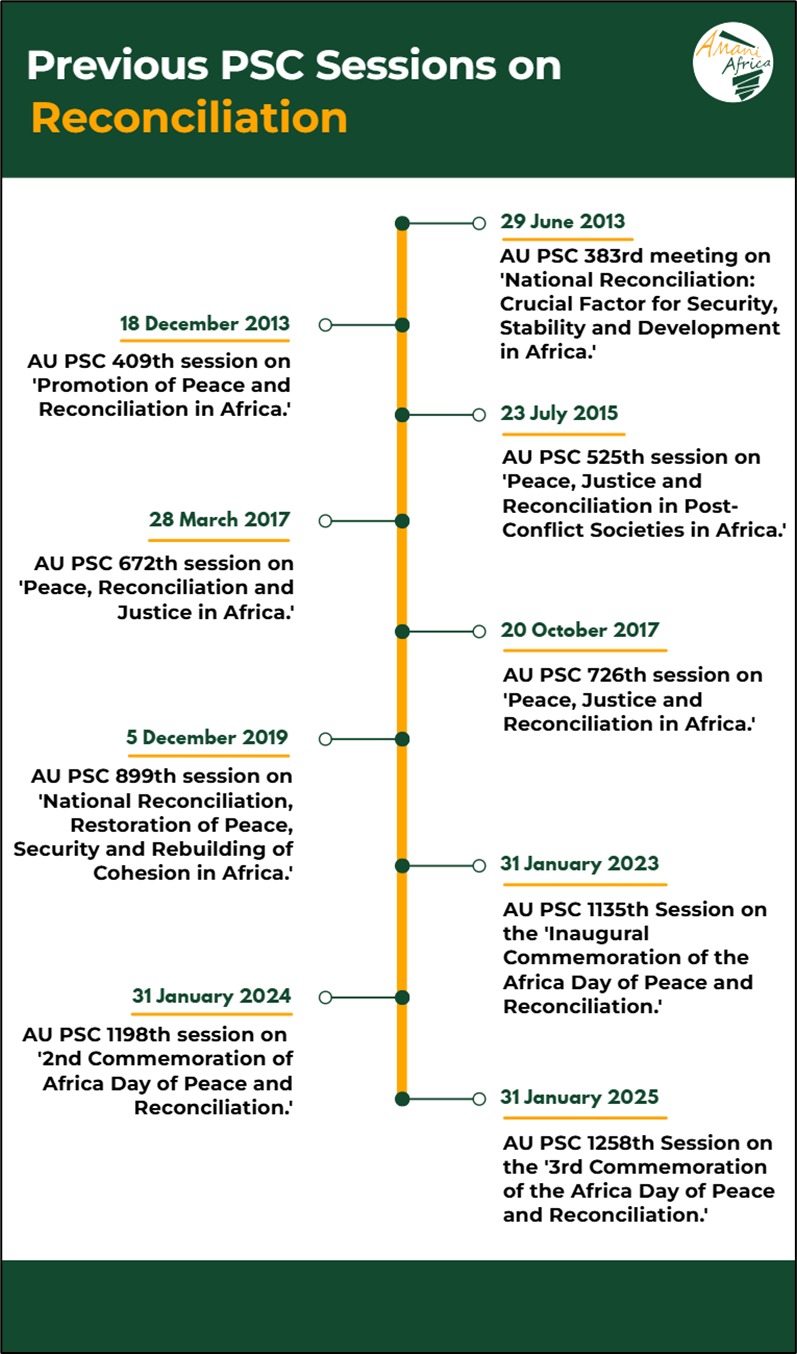
Since its inaugural meeting in 2023, the session has been traditionally held on 31 January of each year, following the declaration of the 16th Extraordinary Session of the AU Assembly on terrorism and unconstitutional changes of government in Africa held in May 2022 in Malabo, Equatorial Guinea, in which it decided to institutionalise the commemoration annually. During the last commemoration, the 3rd, held on 31 January 2025, the PSC called for the ‘domestication of the commemoration of the Africa Day of Peace and Reconciliation at Regional and national level…’ and highlighted the need for ‘the ‘Africa Day of Peace and Reconciliation’ to be aligned with efforts to advance the implementation of the AU Transitional Justice Policy, which provides a roadmap, ensuring that reconciliation is built on accountability, truth-telling, and social cohesion.’
Given this, with lessons learnt, South Africa’s experience, anchored by its Truth and Reconciliation Commission (TRC), offers a profound lesson in choosing restorative justice over retribution. By prioritising the public acknowledgement of truth in exchange for conditional amnesty, the model allowed a fractured nation to transition from apartheid to democracy without collapsing into a cycle of revenge. The Côte d’Ivoire experience, on the other hand, highlights the necessity of moving reconciliation beyond the capital city and into the heart of rural and urban neighbourhoods through local peace initiatives like the UPF-Côte d’Ivoire’s journey over the past two decades in conflict prevention, youth engagement, and community reconciliation. This provides a vital lesson for current conflict zones: for a peace agreement to hold, it must empower community leaders and local peace initiatives to act as mediators, effectively mending the social fabric by fostering face-to-face reconciliation between neighbours who were once divided by conflict.
Sierra Leone’s post-civil war recovery is anchored in the ‘Fambul Tok’ (Family Talk) model, which emphasises that reconciliation must happen at the village level, not just in high courts. Following its 11-year civil war (1991–2002), Sierra Leone adopted a multifaceted approach to recovery by combining judicial accountability with social healing. This strategy centred on the Truth and Reconciliation Commission (TRC) and the Special Court for Sierra Leone (SCSL) to address wartime atrocities. Simultaneously, grassroots programmes like Fambul Tok were established to mend the social fabric and promote forgiveness at the community level. In Angola, following the end of its 27-year civil war in 2002, the country has evolved into a prominent regional peacemaker under the leadership of President João Lourenço – the AU’s Champion for Peace and Reconciliation. The nation has prioritised diplomatic mediation, especially regarding the conflict in the DRC. In South Sudan, the peace and reconciliation landscape in 2026 is characterised by a fragile adherence to the R-ARCSS framework. The promise of the 2018 Revitalised Agreement is still alive, yet it is shadowed by relentless local violence. Significant legislative steps have been taken, but the cycle of deadly conflict remains a formidable barrier to lasting reconciliation.
Regional peace and stability in the Great Lakes region hinge on strong cooperation frameworks and inclusive, long-term strategies that address both immediate security threats and deeper structural challenges. Central to these efforts is the Peace, Security and Cooperation Framework (PSCF) for the DRC and the region, alongside the work of the International Conference on the Great Lakes Region (ICGLR), which brings together more than eleven member states to curb conflict and promote development. Yet durable peace cannot be achieved without tackling root causes such as disputes over natural resources, weak governance, and the lingering legacy of violence, particularly in the DRC, Rwanda, and Burundi. National reconciliation initiatives, including Rwanda’s National Unity and Reconciliation Commission and Burundi’s power-sharing arrangements, have sought to rebuild social cohesion and political stability.
In addition, as previously mentioned in the previous commemoration on the importance of further strengthening the Continental Early Warning System and preventive diplomacy on the Continent, it will be imperative that the council addresses this, aligning its deliberations with the ongoing APSA review and reform process. By linking these reforms to the peace, security, and development nexus, the PSC must encourage Member States to look beyond immediate security interventions and instead redouble efforts to address the deep-seated structural root causes of violence. This involves a holistic commitment to fixing governance-related factors – such as political exclusion and socio-economic inequality – ensuring that the AU’s reformed peace architecture is equipped not just to silence guns, but to prevent them from being fired in the first place.
The meeting is expected to result in a communiqué. The PSC is expected to welcome the 4th Commemoration of Africa Day for Peace and Reconciliation and call for the need to continue promoting the culture of peace, tolerance, justice, forgiveness, and reconciliation as an important step for conflict prevention, especially in post-conflict communities. Council is also likely to acknowledge the role of President João Manuel Gonçalves Lourenço, of Angola, as the AU Champion for Peace and Reconciliation, applauding his efforts to promote peace and reconciliation and his efforts to galvanise support for peace initiatives across the region. Council may also highlight the important role of national reconciliation towards achieving the AU’s noble goal of Silencing the Guns by 2030, considering the critical role that reconciliation plays in preventing conflict relapse and laying a strong foundation for sustainable peace in countries emerging from violent conflicts. It will also be important for the PSC to underscore the importance of inclusive and transparent political transitions, and emphasise the need for comprehensive peace, reconciliation, and development initiatives across the continent.
Consideration of the half-year report of the Chairperson of the AU Commission on elections in Africa
Consideration of the half-year report of the Chairperson of the AU Commission on elections in Africa
Date | 25 January 2026
Tomorrow (26 January), the African Union (AU) Peace and Security Council (PSC) will convene its 1327th Session to consider the mid-year report of the Chairperson of the AU Commission on elections in Africa, covering the period between July and December 2025.
Following the opening statement of the Chairperson of the PSC for the month, Jean-Léon Ngandu Ilunga, Permanent Representative of the Democratic Republic of Congo to the AU, Bankole Adeoye, the Commissioner for Political Affairs, Peace and Security (PAPS), is expected to present the report. Statements are also expected from the representatives of Member States that organised elections during the reporting period.
As per the PSC’s decision from its 424th session in March 2014, which mandates periodic updates on African electoral developments, the Chairperson presents a mid-year elections report. The previous update was delivered during the 1288th PSC session on 4 July, 2025 and covered electoral activities from January to June 2025. Tomorrow’s briefing will similarly provide accounts of elections conducted from July to December 2025, covering elections held in Cameroon, the Central African Republic, Côte d’Ivoire, Egypt, Gabon, Guinea-Bissau, Guinea, Malawi, the Seychelles, Somalia, and Tanzania, while also outlining the electoral calendar for the first half of 2026.
Across the second half of 2025, governance trends across Africa reflected a complex and often uneven interplay between electoral continuity, democratic backsliding, and institutional resilience. A recurring pattern was the consolidation of executive power through elections held in constrained political environments, frequently following constitutional changes that weakened term limits or enabled incumbents or transitional authorities to entrench themselves. Many of these polls were marked by low or moderate voter turnout, opposition boycotts or exclusions, and contested credibility, even where regional and continental observation missions officially endorsed peaceful conduct, highlighting a growing gap between formal electoral procedures and substantive democratic competition. At the same time, episodes of acute instability, most notably the military interruption of elections in Guinea-Bissau, underscored the continued fragility of civilian rule in some contexts, prompting robust but reactive responses from regional bodies. In contrast, a smaller number of cases demonstrated democratic resilience through competitive elections, peaceful concessions, and credible alternation of power.
In the aftermath of Cameroon’s contested 12 October 2025 presidential election, President Paul Biya was re-elected to an eighth term amid heightened political tensions. Post-election protests were reported in parts of the country, with security forces intervening to restore order, resulting in casualties. The Constitutional Council confirmed Biya’s victory with 53.7% of the vote, a result rejected by opposition candidate Issa Tchiroma Bakary, who claimed victory and accused authorities of systematic manipulation. The AU deployed an election observer mission led by Bernard Makuza, former Prime Minister and former President of the Senate of the Republic of Rwanda, composed of 40 short-term observers (STOs). Later, a joint statement from the AU and the Economic Community of Central African States (ECCAS)indicated that ‘the election was conducted peacefully, with respect for democratic values and citizen participation.’ They also noted low turnout and urged stakeholders to channel grievances through legal mechanisms.
In the Central African Republic’s 28 December 2025 presidential election, the incumbent President Faustin-Archange Touadéra secured a third term, garnering approximately 76.15 % of the vote according to provisional results from the National Elections Authority, which will be officially validated by the Constitutional Court. Touadéra’s victory follows a controversial 2023 constitutional referendum that abolished presidential term limits and extended term lengths, enabling him to run again and entrench his decade-long rule. The major opposition coalition boycotted the vote, decrying an unequal political environment and unfair conditions, and some challengers have alleged electoral malpractice and fraud. Voter turnout was at around 52%, reflecting mixed public engagement amid ongoing instability, even as the election technically proceeded peacefully and without widespread unrest reported.
The 2025 electoral cycle in Côte d’Ivoire opened with the presidential election on 25 October, followed by legislative polls on 27 December. According to the electoral commission, President Alassane Ouattara won decisively with 89.8% of the vote, while businessman Jean-Louis Billon trailed at 3.09%. Voter turnout stood at 50.1%, underscoring limited public participation. At the invitation of Ivorian authorities, the AU and the Economic Community of West African States (ECOWAS) deployed a joint Election Observation Mission (EOM) of more than 250 observers across the country, reflecting strong regional engagement. Their preliminary report highlighted candidate exclusions, weak opposition presence, accessibility challenges, and logistical shortcomings. For the December legislative elections, the AU dispatched a separate mission of 31 observers to assess preparations, voting operations, and the post-election environment.
In Egypt, following the August senate elections, parliamentary elections were conducted in multiple phases starting in November, producing a legislature overwhelmingly aligned with President Abdel Fattah al-Sisi. His political bloc secured the super-majority required to advance constitutional amendments, consolidating executive dominance. Overall turnout and participation levels fluctuated.
The 23 November 2025 general elections in Guinea-Bissau, intended to produce a legitimate presidential and legislative outcome in a country long beset by political fragility, were abruptly upended when military forces seized power on 26 November, a day before provisional results were to be announced. Both incumbent President Umaro Sissoco Embaló and opposition candidate Fernando Dias da Costa had claimed victory prior to the official tally, but the military takeover involved storming the National Electoral Commission’s offices, the seizure and destruction of ballots, tally sheets and servers, and suspension of the entire electoral process, making completion of the vote effectively impossible. Major-General Horta Inta-A Na Man was installed as transitional president and appointed a new cabinet, drawing accusations from opposition figures and observers that the coup was either staged or exploited to forestall the constitutional transfer of power and preserve entrenched elite interests. In response, ECOWAS convened an extraordinary summit on 27 November, condemned the coup, suspended Guinea-Bissau, rejected any arrangements undermining the electoral process, and demanded the immediate declaration of the 23 November election results, while mandating a high-level mediation mission led by Sierra Leone’s President Julius Maada Bio. The PSC followed on 28 November by also suspending Guinea-Bissau, strongly condemning the coup, and calling for the completion of the electoral process and inauguration of the winner during its 1315th session. The Council also tasked the AU Commission Chairperson to create an inclusive AU Monitoring Mechanism, in collaboration with ECOWAS and stakeholders, to monitor the situation, especially the implementation of ECOWAS and PSC decisions.
In the 28 December 2025 presidential election in Guinea, held under a new constitution that followed the 2021 military coup, junta leader Mamady Doumbouya secured a landslide victory with 86.72 % of the vote and was later sworn in as president, marking the end of the formal transitional period since he seized power. AU observers were deployed to monitor the campaign and voting phases, with a mission arriving in mid-December and issuing preliminary statements that attested that the election took place in a peaceful, orderly, and credible environment. However, the electoral trajectory, notably a constitutional referendum earlier in 2025 that amended the legal framework to allow members of the ruling military authorities to stand as candidates, has deepened concerns about compliance with the African Charter on Democracy, Elections and Governance (ACDEG) Article 25(4), which seeks to restrict participation of those who have seized power through unconstitutional means.
In Malawi’s 16 September 2025 general elections, former President Peter Mutharika won a clear victory over incumbent President Lazarus Chakwera, securing 56.8 % of the vote to Chakwera’s 33%, with turnout around 76% of registered voters, prompting a peaceful concession by Chakwera and a commitment to a smooth transfer of power. The elections were observed by a joint African Union–COMESA Election Observation Mission and a SADC Electoral Observation Mission, both deployed at the invitation of Malawi’s government to assess compliance with national, regional, and international democratic standards, and to engage with key electoral stakeholders, including the Malawi Electoral Commission (MEC), political parties, civil society and media. Preliminary observation reports highlighted a generally peaceful and orderly process, with long queues and broad voter participation, though technical issues such as late polling station openings and structural challenges (e.g., biometric machine failures and the need for improved dispute resolution timelines) were noted, pointing to areas for future reform. This election reinforced Malawi’s democratic resilience and provided lessons for Africa on peaceful leadership alternation and the significance of robust electoral frameworks.
In the 2025 Seychelles general and presidential elections, the multi-stage process began with presidential and National Assembly polls on 25–27 September 2025, observed by a Joint AU and COMESA Election Observation Mission following an invitation from the Government and Electoral Commission; the mission engaged with key stakeholders across political, media, civic and institutional spheres to assess compliance with continental democratic standards enshrined in ACDEG and related instruments. According to the Joint Preliminary Report of the Joint mission, the candidate secured an outright majority in the first round, triggering a run-off held from 9 -11 October 2025 between opposition leader Patrick Herminie of the United Seychelles party and incumbent President Wavel Ramkalawan of Linyon Demokratik Seselwa. Herminie won the run-off with 52.7% of the vote to Ramkalawan’s 47.3%, returning his party to executive leadership and reversing the 2020 result that had first brought Ramkalawan to office. Observers and regional bodies, including SADC, noted the generally peaceful, orderly and professionally managed electoral environment.
In Gabon, the 27 September (first round) and 11 October (second round) parliamentary elections consolidated President Brice Oligui Nguema’s political dominance following his April presidential win, with his newly formed Democratic Union of Builders (UDB) securing a decisive majority in the National Assembly, winning around 101–102 out of 145 seats and relegating the long-dominant Gabonese Democratic Party (PDG) to a distant second, alongside a handful of smaller parties and independents. According to International IDEA’s Global State of Democracy Tracker, while the elections were largely peaceful and marked a significant shift in Gabon’s post-coup political landscape, they were also marred by irregularities, including missing ballots and annulments in several constituencies.
In Tanzania, the general elections held on 29 October 2025 produced an overwhelmingly one-sided result with President Samia Suluhu Hassan declared the winner on over 98% of the vote, but they were marred by deep controversy, violent unrest, and allegations of severe democratic deficits. The African Union Election Observation Mission’s preliminary report indicated that the elections “did not comply with AU principles, normative frameworks, and other international obligations and standards for democratic elections”, noting a restricted political environment, opposition boycotts and exclusions, internet shutdowns, outbreaks of deadly protests, and significant procedural irregularities that compromised electoral integrity and peaceful acceptance of results. On the other hand, the Chairperson of the African Union Commission, H.E. Mahmoud Ali Youssouf, issued a public statement congratulating President Suluhu on her victory while expressing regret at the loss of life in post-election protests and emphasising respect for human rights and the rule of law.
The period also marked a pivotal shift in Somalia’s electoral framework with the introduction of direct municipal elections. Somalia’s municipal elections held on 25 December 2025 in Mogadishu’s Banadir region introduced direct, one-person-one-vote polling for the first time in nearly six decades, a major departure from the indirect, clan-based model used since 1991 and direct voting last seen in 1969. The polls, involving some 1,604 candidates competing for 390 council seats and more than 500,000 registered voters, were widely framed by authorities and local observers as a critical first step toward restoring universal suffrage and laying the groundwork for nationwide direct elections scheduled for 2026, and showcased significant logistical and security efforts amid ongoing instability and insurgent threats. While the exercise proceeded under heightened security and with heavy public interest, it was also shadowed by political tensions, including opposition boycotts and concerns about inclusivity and turnout.
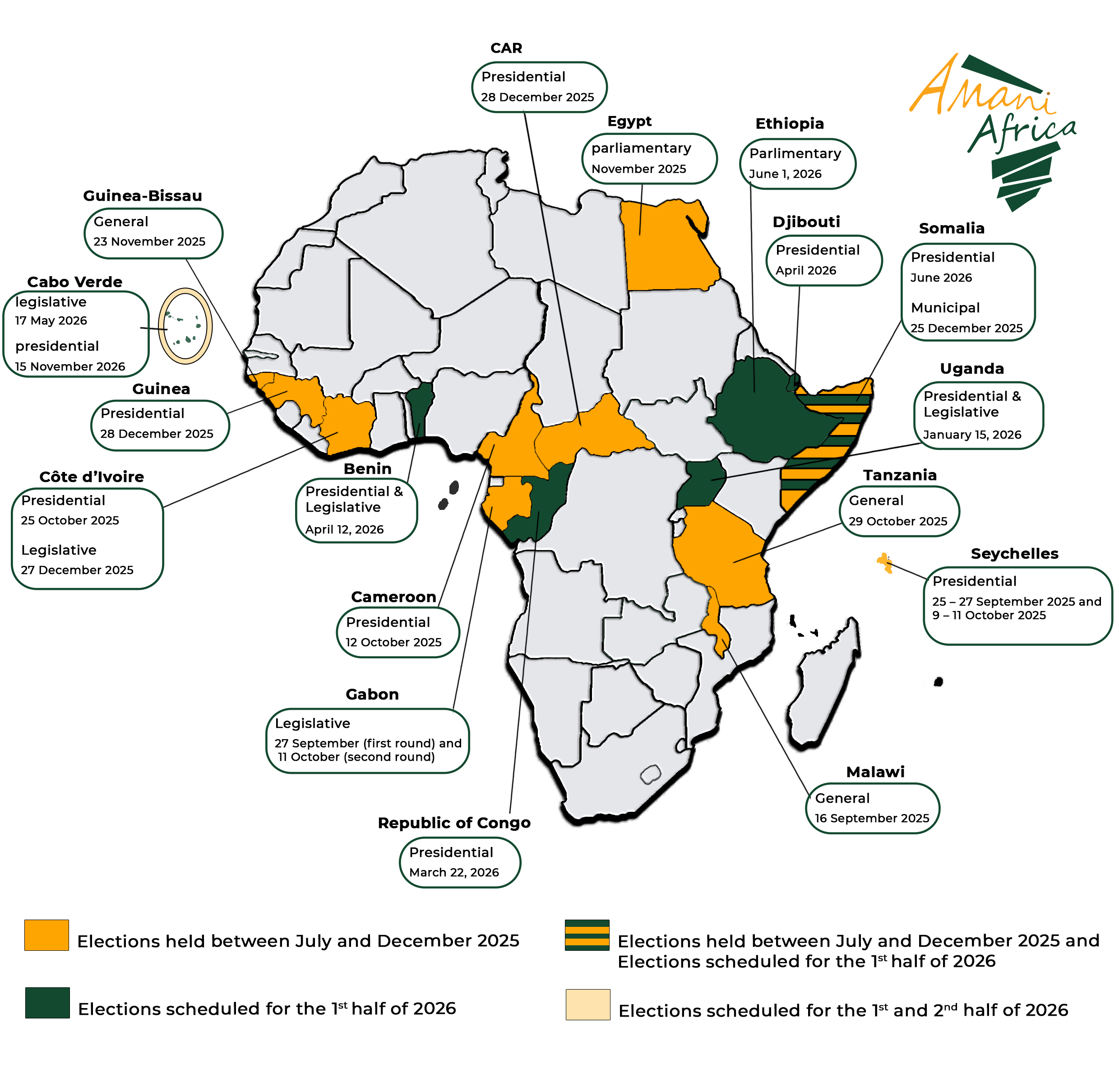
Furthermore, the report will highlight elections scheduled between January and June 2026. The majority of elections planned for 2026 will take place in the first half of the year, with Benin, Cape Verde, Djibouti, Ethiopia, Somalia, and Uganda holding polls during this period.
Uganda opened Africa’s 2026 election cycle with a presidential poll on 15 January. The presidential election saw long-time incumbent President Yoweri Museveni extend his rule into a seventh term, securing approximately 71.6 % of the vote against opposition leader Robert Kyagulanyi (Bobi Wine), who received about 24.7 %, in a contest marked by significant controversy and political tension. Official results indicated a 52.5 % voter turnout, the lowest since the return to multiparty politics. The joint preliminary statement of The African Union – Common Market for Eastern and Southern Africa and the Inter-Governmental Authority on Development Election Observation Mission indicated that Uganda’s elections proved more peaceful than the 2021 election, earning praise for voter patience, professional staff, and transparent counting, though concerns persisted over military involvement, internet shutdowns, opposition arrests, media bias, high fees excluding marginalized groups, Electoral Commission independence issues, and Election Day delays.
The Republic of Congo is scheduled to hold its presidential election on 22 March 2026, with incumbent President Denis Sassou Nguesso officially nominated by the ruling Congolese Labour Party (PCT) to run for another term alongside candidates from opposition parties.
The 2026 presidential election in Djibouti is scheduled to take place by April 2026, with incumbent President Ismaïl Omar Guelleh, who has governed the country since 1999, formally nominated by the ruling Rassemblement Populaire pour le Progrès (RPP) to seek a sixth term following a constitutional amendment in late 2025 that removed the presidential age limit, allowing the 77-year-old leader to run again.
The 7th general election in Ethiopia is scheduled to be held on 1 June 2026, with the National Election Board of Ethiopia (NEBE) confirming the official election timetable, including candidate registration and campaigning periods ahead of polling day. A wide range of political parties are expected to contest seats in the House of Peoples’ Representatives, including the ruling Prosperity Party and several opposition and regional parties participating with their candidates across constituencies.
The national election process in Somalia is expected to take place in June 2026 under a newly adopted electoral framework aimed at moving toward universal suffrage and direct elections after decades of indirect, clan-based vote systems. Preparatory local polls and voter registration efforts were conducted in late 2025 as part of this transition, although there remains significant political disagreement over the roadmap and mechanisms for the upcoming national vote. Several political figures, including incumbent President Hassan Sheikh Mohamud and other declared or prospective contenders such as Abdi Farah Shirdon, are positioning themselves for the upcoming presidential race amid a fractured political landscape.
In Benin, President Patrice Talon steps down in line with constitutional term limits, breaking with the regional trend of incumbents extending their rule. The 2026 presidential election in Benin is set for 12 April 2026, with former finance minister Romuald Wadagni, endorsed by outgoing President Talon, emerging as a leading candidate after the ruling coalition cleared the required sponsorship thresholds. On 11 January 2026, parliamentary and local elections were held, in which the ruling Progressive Union for Renewal and the Republican Bloc together won all 109 seats in the National Assembly under a new 20 % threshold that left the main opposition without representation. These votes followed a failed coup attempt on 7 December 2025, when a small group of soldiers briefly announced the overthrow of the government but were quickly contained by loyal forces with regional support.
The Republic of Cabo Verde will hold its legislative elections on 17 May 2026 and its presidential election on 15 November 2026, with a possible second round for the presidency on 29 November if no candidate wins an outright majority. President José Maria Neves announced the dates after consultations with political parties and the National Elections Commission, and key parties preparing to contest include the ruling Movement for Democracy (MpD) and opposition parties such as the African Party for the Independence of Cape Verde (PAICV) and the Independent and Democratic Cape-Verdean Union (UCID).
The expected outcome is a communiqué. The PSC may take note of the Chairperson’s elections report, covering electoral developments from July to December 2025 and the electoral calendar for the first half of 2026. The PSC may commend Member States where elections were conducted peacefully and led to credible outcomes, while encouraging those facing post-electoral tensions or transitions to resolve disputes through constitutional and legal mechanisms. The Council may reiterate its condemnation of unconstitutional changes of government, and call for the restoration and completion of disrupted electoral processes in line with AU norms. It may further underscore the importance of aligning national electoral frameworks with the African Charter on Democracy, Elections and Governance, particularly concerning term limits, inclusivity, and the participation of transitional authorities. The PSC may encourage Member States to invite AU election observation missions in a timely manner, undertake necessary electoral and institutional reforms, ensure the neutrality of security forces, and uphold restraint and responsibility among all stakeholders to promote peaceful, credible, and inclusive elections across the continent.
Sudan’s Crisis is Africa’s Crisis - And Its Responsibility
Sudan’s Crisis is Africa’s Crisis - And Its Responsibility
Date | 22 January 2026
INTRODUCTION
Sudan is now the epicenter of one of the world’s deadliest conflicts and most desperate humanitarian crises. The numbers speak for themselves: since 2023, more than 150,000 people are estimated to have died as a result of violence and other related causes, 7.3 million have been newly internally displaced—on top of 2.3 million already displaced, bringing the total 9.6 million, 4.3 million have fled as refugees to neighboring countries, and more than 30 million people—two-thirds of the population—require humanitarian assistance (here). The atrocities committed defy words, and the battle for El-Fasher—its fall to the Rapid Support Forces (RSF) and the unbearable reports that followed—has revived the darkest echoes of an earlier tragedy: the scorched-earth campaign waged in Darfur following the 2003 armed rebellion in that region. The fear now is stark: what happened there could happen again, elsewhere.
Briefing on the situation in South Sudan
Briefing on the situation in South Sudan
Date | 22 January 2026
Tomorrow (23 January), the African Union (AU) Peace and Security Council (PSC) will convene a session to receive an update on the situation in South Sudan.
Following opening remarks from Jean Leon Ngandu Ilunga, the Permanent Representative of the Democratic Republic of Congo (DRC) to the AU and chairperson of the PSC for the month of November, Bankole Adeoye, the AU Commissioner for Political Affairs, Peace and Security, is expected to make a statement. South Sudan, as a country concerned, is also expected to make a statement. Others expected to make statement include the Inter-Governmental Authority on Development (IGAD), as the concerned regional economic community/Mechanism (REC/M), South Africa (as Chairperson of the AU Ad Hoc High-Level Committee on South Sudan (C5), Chairperson of the Reconstituted Joint Monitoring and Evaluation Commission (R-JMEC); and the representative of the United Nations Secretary-General and Head of the United Nations Mission in South Sudan (UNMISS).
The political, security, and humanitarian situation in the country appears to have deteriorated further since the Council last discussed South Sudan on 28 October 2025. Political tension is mounting. Fighting and insecurity are spreading.
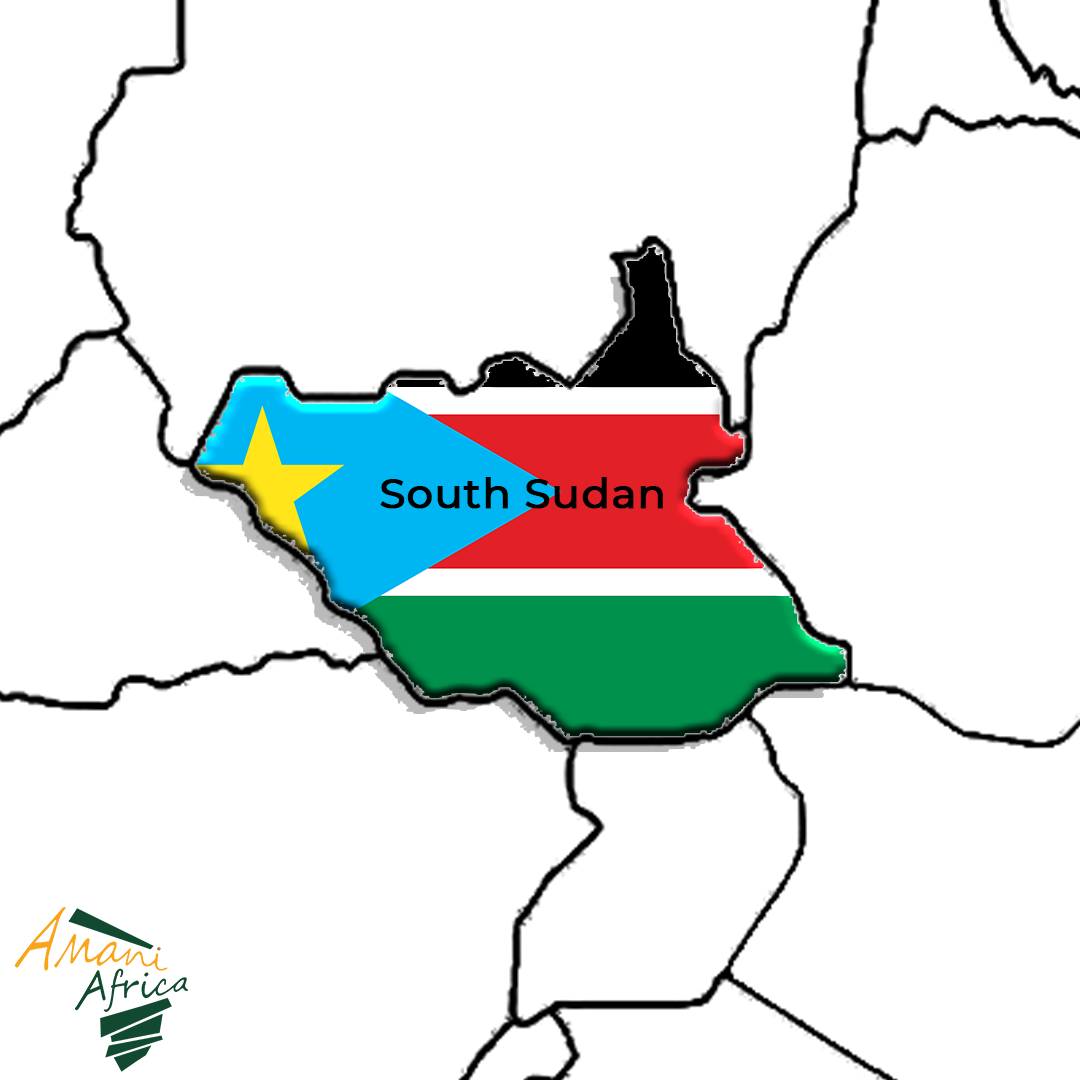
It is to be recalled that in its communiqué adopted at the last session of its 1308th meeting held on 28 October, the AU Peace and Security Council (AUPSC) underscored the need to avoid any actions that could jeopardise the full implementation of R-ARCSS, which it described as the only viable pathway towards a consensual and sustainable solution to the country’s challenges.
However, R-ARCSS is now on the verge of collapse. The Revitalised Joint Monitoring and Evaluation Commission (RJMEC), the body monitoring the R-ARCSS, observed in its report released in October that there is ‘systematic violation of the responsibility-sharing arrangements across all crucial bodies, including functionality of the executive and legislature.’ Progress on other provisions critical to South Sudan’s transition from conflict to peace, including those required for the holding of elections, remains stalled. In its report to the Reconstituted Transitional National Legislative Assembly in December 2025, RJMEC expressed ‘serious concerns that if urgent steps are not taken to expedite progress, then holding elections as scheduled in December 2026 may be extremely difficult.’
The SPLM-IO under Machar’s leadership has declared the R-ARCSS defunct following Machar’s arrest, while another faction continues to cooperate with the government. Following the detention of Riek Machar in March, the first vice president and signatory of the R-ARCSS as the leader of the SPLM-IO, the party has experienced internal divisions, with some of the members of the party coopted into and collaborating with the government.
Meanwhile, Machar and seven of his allies are standing trial before a Special Court in Juba. During its most recent session on 12 January, the court barred the public and the media from attending the proceedings, citing the need to protect prosecution witnesses. Machar and his allies have been charged with murder, treason, and crimes against humanity. Machar has rejected the charges and claimed immunity as a sitting vice president. His defence team has also challenged the court’s jurisdiction, arguing that such crimes fall within the mandate of an AU hybrid court, as stipulated under the R-ARCSS. Nevertheless, the Special Court dismissed these objections, including challenges to the constitutionality of the proceedings. It is to be recalled that the AUPSC called for the immediate and unconditional release of Machar and his wife, but the South Sudanese government rejected the appeal.
The SPLM has also experienced internal fragmentation, with veteran politician Nhial Deng Nhial suspending his membership in the party and launching a new political movement, the South Sudan Salvation Movement, which operates under the opposition United People’s Alliance led by Pagan Amum. In a surprise move in November, President Salva Kiir dismissed one of his vice presidents and the SPLM’s First Deputy Chairperson, Benjamin Bol Mel, who had been widely regarded as being prepared to be a possible successor. Although Bol Mel was promoted to the rank of general within the National Security Service’s Internal Bureau, he was subsequently stripped of his military rank and dismissed from the national security service. Kiir then reinstated James Wani Igga as vice president; Igga had been replaced by Bol Mel earlier in 2025.
President Kiir has also frequently reshuffled the cabinet through presidential decrees amid the unfolding political crisis. These reshuffles have been criticised for violating the 2018 R-ARCSS, as the President appoints and dismisses officials without consulting the other signatories, thereby undermining the power-sharing arrangements stipulated in the agreement.
In a step that is feared to cause further erosion of the collapsing R-ARCSS and in another surprise move in December, the government announced a series of amendments to the R-ARCSS following a meeting convened by President Kiir to discuss the final phase of the transition and preparations for general elections scheduled for December 2026. According to the government, the Sudan People’s Liberation Movement (SPLM), a faction of the SPLM-IO not aligned with Machar, the South Sudan Opposition Alliance (SSOA), the Former Detainees (FD), and Other Political Parties (OPP) attended the meeting.
The amendments agreed at the December meeting reportedly removed provisions linking the holding of general elections to the completion of a permanent constitution, a process that has dragged on for the past eight years. In the absence of a permanent constitution, general elections would be conducted under the Transitional Constitution adopted in 2011. The amendments also stipulate that a national population and housing census—deemed necessary for elections under the R-ARCSS—would be conducted after the elections.
The government indicated that the amendments would undergo a review process before being ratified by the national legislature. However, the SPLM-IO reportedly characterised the move as illegal, arguing that it excluded other signatories to the peace agreement and rejected the amendments in their entirety. Civil society representatives also expressed concern over the unexpected decision, calling for respect for the R-ARCSS and greater inclusion of civil society in the process.
The political crisis has contributed to a significant deterioration in South Sudan’s security situation. Reports indicate intensified fighting in various parts of the country between government and opposition forces. As political tension and fighting escalate, recent weeks have witnessed intensified hostilities in Jonglei State involving ‘repeated aerial bombardments by the South Sudan People’s Defence Forces (SSPDF), clashes with SPLM/A-IO and the reported mobilisation of armed civilian militias’, noted the UN Commission on Human Rights in its press release of 18 January 2026. This escalating fighting is compounded by local and intercommunal violence.
The spreading and intensifying violence is precipitating significant civilian casualties and destruction of critical infrastructure, including health facilities, schools, and public buildings, as well as severe limitations of humanitarian access.
These developments are aggravating an already dire humanitarian situation. According to OCHA, two-thirds of the population will require humanitarian assistance in 2026. It is reported that more than 100,000 people, predominantly women, girls, older persons and persons with disabilities, have been forcibly displaced across the state since late December 2025. The alarming humanitarian and civilian protection situation is compounded by worsening economic conditions, corruption and disease outbreaks. The ongoing conflict in neighbouring Sudan has further strained South Sudan’s already dire humanitarian situation.
As Amani Africa indicated in its briefing to the UN Security Council in November, South Sudanese civilians are the ones bearing the brunt of the deteriorating political and security situation in the country, underscoring a heightening need for reinforcing measures for the protection of civilians and humanitarian support.
At a time when the Horn of Africa is facing multiple challenges, the heightening risk of South Sudan’s relapse back to full-scale war has become a major concern, thus requiring a more robust conflict prevention effort from all quarters, not least of all the AU. In a joint statement issued on 18 December, the Troika (the United States, the United Kingdom, and Norway) expressed alarm over the widespread conflict across the country, describing it as a major setback. The Troika urged South Sudanese leaders to reverse course, halt armed attacks, immediately return to the nationwide ceasefire, and engage in sustained, leader-level dialogue. These calls were reinforced by a subsequent joint statement supported by the embassies of Canada, France, Germany, Japan, Norway, the Netherlands, Sudan, Uganda, the United Kingdom, and the United States, as well as the European Union delegation in Juba, which stressed the need for inclusive dialogue to address the country’s political and security crisis.
It is to be recalled that the AUPSC encouraged the continued engagement of the AU High-Level Ad Hoc Committee for South Sudan (C5) in supporting the constitution-making process and preparations for the December 2026 elections. A C5 delegation comprising representatives from South Africa, Algeria, Chad, Nigeria, and Rwanda visited Juba on 14 January. It held high-level meetings with South Sudanese authorities to discuss the political situation, implementation of the R-ARCSS, and preparations for general elections, among other issues. The AUPSC is expected to receive an update on the outcome of the visit.
The expected outcome of the session is a communiqué. The PSC is expected to express grave concern over the deteriorating political and security situation, the systematic violations of the R-ARCSS and the rising danger of the country’s relapse to full-scale civil war. It may condemn and call for an unconditional end to the indiscriminate use of violence and violence against civilians. The PSC may also reaffirm that the R-ARCSS remains the most viable framework for sustainable peace and stability in South Sudan and may urge both parties to recommit to the permanent ceasefire and transitional roadmap. It could also call for the release of all political detainees and restoration of political dialogue. As a critical step towards restoration of stability and implementation of R-ARCSS, it may call for an independent investigation of incidents of violations of the revitalised peace agreement, including the March 2025 incident in Nasir, through a mechanism that is put in place by the UN-AU-IGAD. It could also call for full reactivation of the Ceasefire and Transitional Security Arrangements Monitoring and Verification Mechanism (CTSAMVM) to ensure compliance with the ceasefire. To ensure high-level and sustained engagement for preventing South Sudan’s relapse back to full scale civil war, the PSC may reiterate its request for the AU Commission to maintain sustained engagement, including possibly appointing a High-Level Envoy to work jointly with IGAD, the C5, and the Trilateral Mechanism to facilitate direct dialogue between President Kiir and the SPLM-IO leader and signatory to the R-ARCSS Machar.
……………………………………………
For additional reference, check the briefing Amani Africa delivered to the UN Security Council from the link here https://amaniafrica-et.org/amani-africa-tells-the-unsc-to-deploy-preventive-measures-with-urgency-and-decisiveness-to-pull-south-sudan-from-the-brink/
The press statement by the UN Commission for Human Rights in South Sudan, dated 18 January 2026, can also be found at the following link:
https://x.com/uninvhrc/status/2012798544801906798.